Plug-in solar vs. a portable power station
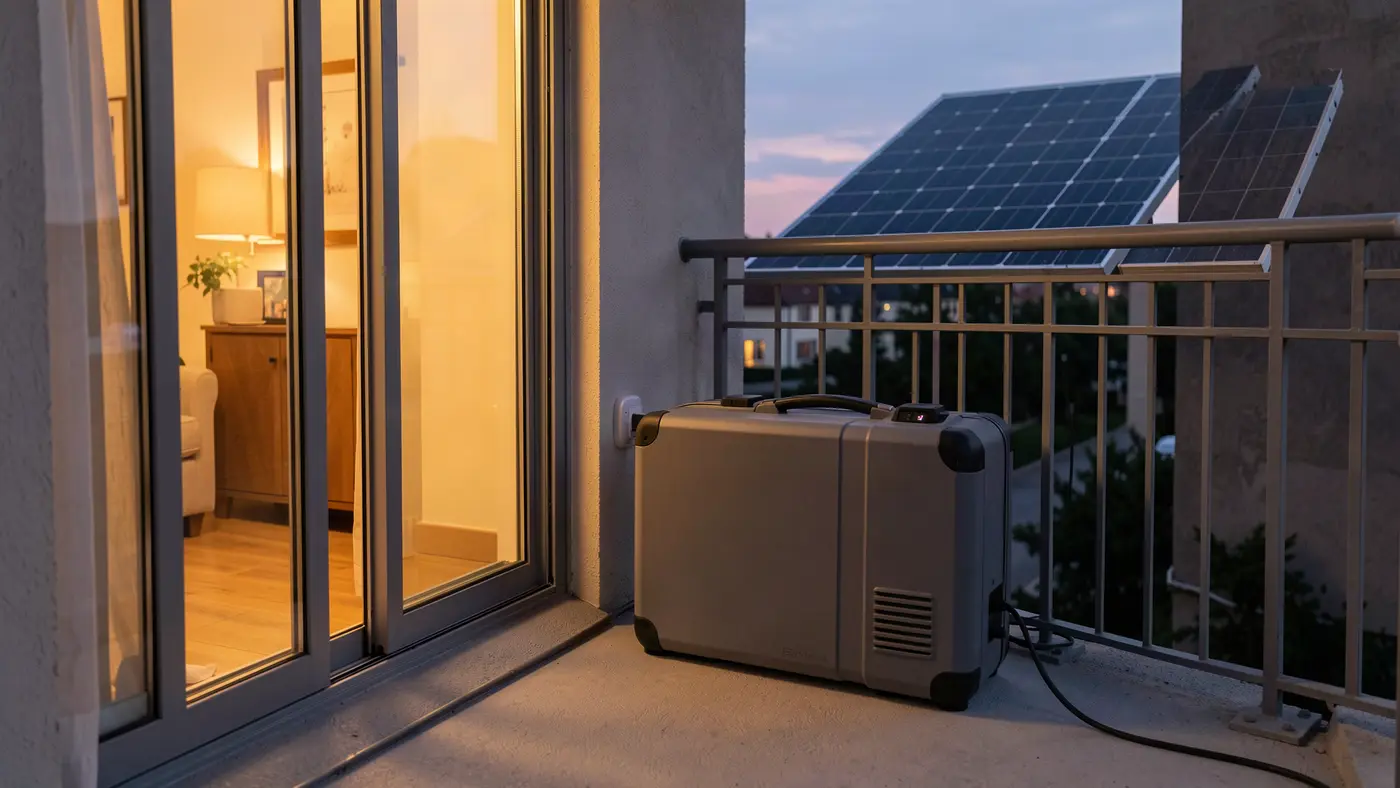
They look similar and both use panels and outlets, but they work in opposite directions. A plug-in kit pushes power into your home's wiring. A power station is a battery you plug things into.
| Plug-in solar kit | Portable power station | |
|---|---|---|
| Connects to | A wall outlet, feeding your home's wiring | Nothing; devices plug into it |
| Lowers your bill by | Offsetting what your home draws, automatically | Only what you manually run from it |
| Works in a blackout | No; must shut off | Yes, that's its main job |
| Needs a state law | Yes, to skip utility interconnection rules | No; it never connects to the grid |
| Certification asked | UL 3700, UL 1741 or similar, per state | Battery and consumer product standards |
Which to buy
- To lower your bill with no effort: a plug-in kit, if your state allows it.
- For outages, camping or a state with no law: a power station with panels.
- Both: plug-in batteries like EcoFlow's STREAM Ultra aim to bridge the two, but the ones we checked were sold out and uncertified. See kits with a battery.
Never plug a power station's output into a wall outlet to feed your home. That's backfeeding without the safety features plug-in laws require.