Is plug-in solar safe?
It can be, under conditions the laws spell out. The risks are specific and well understood, and the safety standards for U.S. outlets are still being written.
Risk 1: a circuit carrying more than it was built for
American outlets and branch circuits weren't designed for power flowing in from a device. Here's the problem experts quoted by Stateline describe: a breaker protects wiring by tripping when too much current flows from the panel. If a solar device feeds current in partway down the circuit, the wire between the device and your appliances can carry the panel's current plus the grid's, and the breaker only sees part of it. Overloaded wire heats up.
That's why size limits exist, and why several laws set a lower tier (391 W in Virginia, Maryland and Colorado; 400 W in New Jersey; 420 W in Maine) above which they expect a dedicated circuit or an electrician. Stateline also reported that UL's certification program requires modifying home circuits before plugging in, and that experts expect manufacturers may eventually solve overload with onboard technology.
See it happen: the interactive circuit explainer lets you overload a wire yourself.
Risk 2: power on the line during an outage
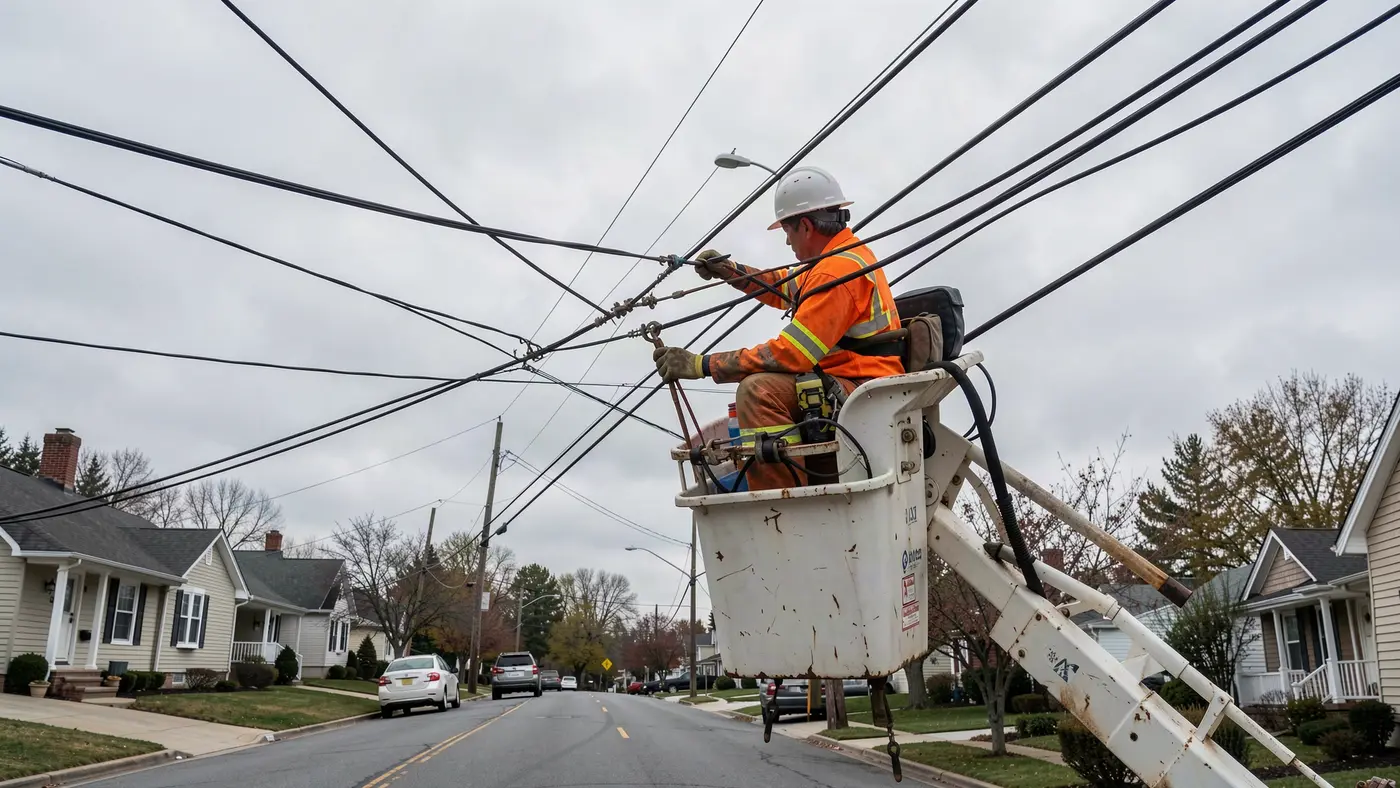
When the grid goes down, line workers expect dead wires. A device still pushing power out could energize them. Every state law we've read requires a feature that stops the device from energizing the building's wiring during an outage. Utilities have still asked for registration or notice so they know where devices are; California's utilities can require a simple registration form for that reason.
The track record abroad is reassuring. NPR reported that Germany has more than 1.2 million registered plug-in systems, and that a DOE-funded research paper found no safety incidents for customers who used them as instructed.
Risk 3: a live plug
A plug connected to a running inverter could carry voltage on its exposed prongs. Stateline reported that UL's certification requires a connector that keeps the blades from carrying power after unplugging.
What certification covers
UL Solutions launched its UL 3700 program in January 2026. It covers shock protection, safe installation, overload protection and preventing reverse current flow. But by November 2026, the certifications we found were mostly for parts, chiefly microinverters, rather than whole kits. A certified inverter doesn't make the rest of a kit certified. See UL 3700 explained.
Practical rules
- Stay within your state's size limit, and under the low tier if you don't want an electrician.
- Use an outdoor GFCI outlet with an in-use cover. Bright Saver's kits are designed for exactly that.
- One device per circuit, plugged straight into the wall. No extension cords or power strips.
- Don't put a plug-in device on a circuit that already runs heavy loads like a space heater.
- Tell your insurer. New Hampshire's law requires the state to warn residents that unlisted or improperly connected systems may affect homeowners or renters coverage; that's good advice anywhere.
A legal device isn't automatically a safe installation. If your home has old wiring, aluminum wiring, or breakers that trip often, have an electrician look first.