Plug-in solar vs. rooftop solar
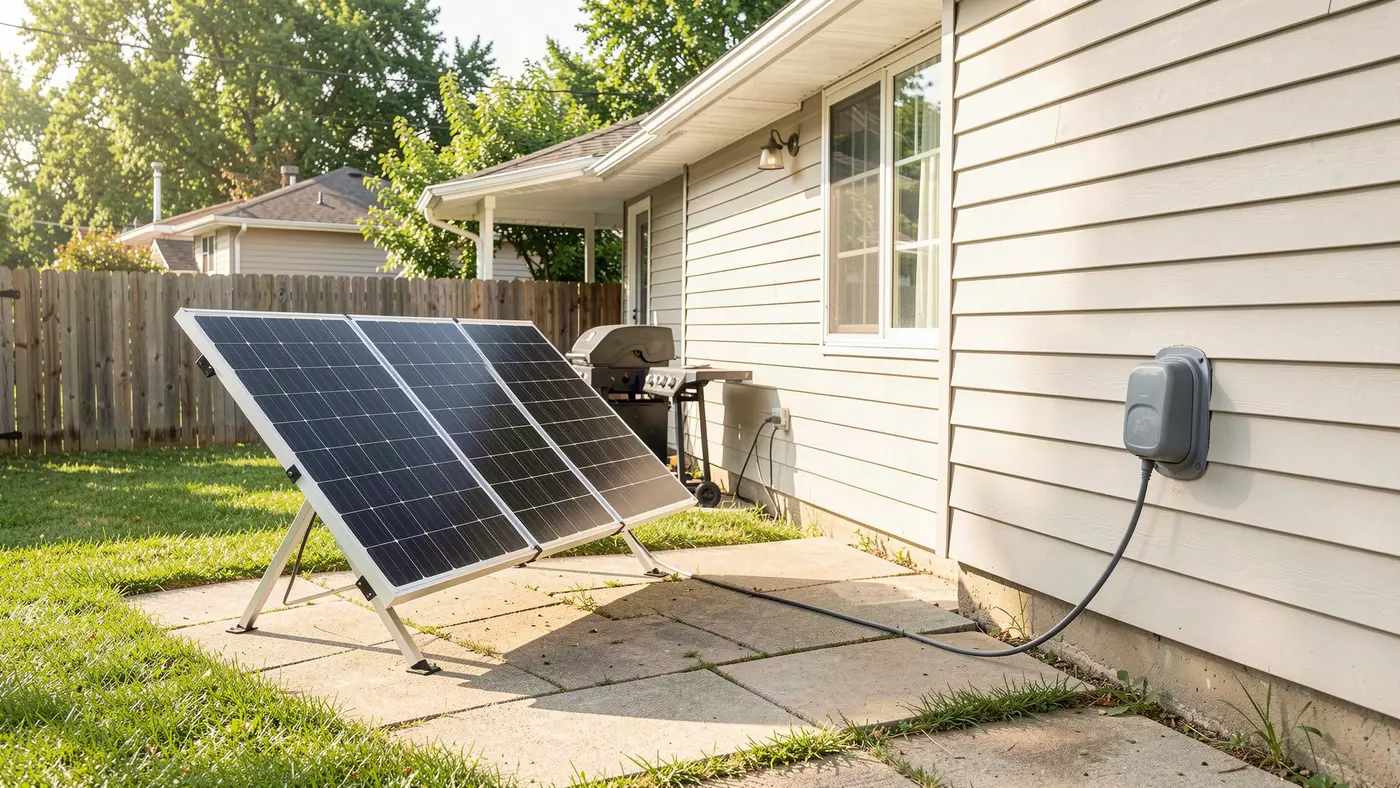
Rooftop solar replaces a big share of a home's electricity; plug-in solar trims a little off it. They're different tools for different people.
| Plug-in kit | Rooftop system | |
|---|---|---|
| Typical size | 180–1,200 W, capped by state law | Median 7.7 kW for 2025 U.S. installs (Berkeley Lab) |
| Cost | $399–$2,499 for kits we verified | Can exceed $20,000 (NPR) |
| Install | You, in an afternoon | Contractor, permits, utility interconnection |
| Exported power | Usually earns nothing | Usually credited under net metering or similar |
| Batteries | A few plug-in units, sold out | 37% of 2025 residential installs paired with storage (Berkeley Lab) |
| Federal tax credit | Ended for expenditures after Dec. 31, 2025 (CRS) | |
| Renters | Possible; some states protect them | Rarely |
Which makes sense
- Own a house with a good roof and plan to stay: rooftop solar offsets far more, even without the federal credit. Plug-in is a way to start small.
- Rent, own a condo, or can't commit: plug-in is the option you actually have. Also look at community solar.