Is plug-in solar worth it?
Sometimes. A small kit in a high-rate state can pay for itself in a few years. The same kit in a low-rate state, on a shaded north-facing balcony, may never pay back.
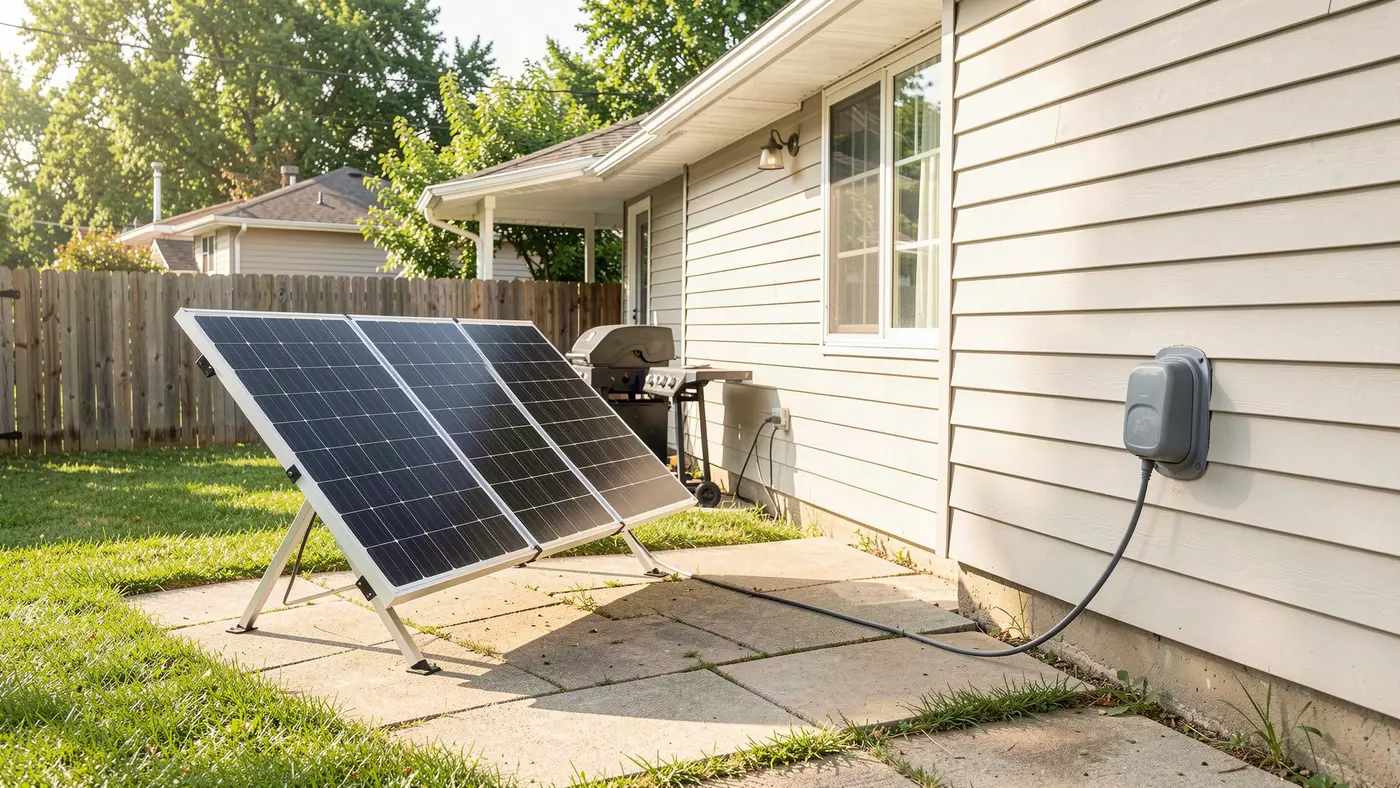
The three numbers
- Your electricity rate. EIA's August 2026 residential averages ranged from 12.72¢ per kWh in Nevada to 29.75¢ in California and 47.18¢ in Hawaii. The U.S. average was 18.16¢, up from 17.57¢ a year earlier. EIA forecasts 18.2¢ for 2026 as a whole, up from 17.3¢ in 2025.
- Sun on the panel. Orientation and tilt matter as much as location. A vertical panel on a railing gets less over a year than one tilted toward the sky.
- How much of the output you use. Most laws give no credit for exports. Every kWh your home doesn't use at the moment it's made is worth nothing to you, and in Connecticut may even be billed.
What advocates estimate
Solar United Neighbors estimates plug-in solar can save $180 to $800 a year depending on location, with about $385 as typical. The top of that range assumes high rates and good sun.
Worked example (our assumptions)
Take a 360 W kit for $432, tilted and mostly unshaded. Using our planning assumption of 115 kWh a year per 100 W, it makes about 414 kWh a year. If you use 85% of it:
- In California at 29.75¢: about $105 a year, paying back in roughly 4.1 years.
- In Utah at 13.31¢: about $47 a year, paying back in roughly 9.2 years.
Those are simple paybacks that ignore rate increases and panel aging. Plug in your own numbers with the calculator.
When it's not worth it
- Your rate is low and the only spot faces north or sits in shade.
- Your state has no law, so the kit needs a full interconnection process.
- You'd have to hire an electrician for a dedicated circuit; that cost can exceed a small kit's price.
- You'd need a bigger kit than you can use during the day, and you'd skip the battery.
Our view: start small. A kit under 400 W is cheap, simple to permit where laws apply, and mostly consumed by a home's background load. Buy more panel only once you know how much you use.