Zero-export kits, batteries and where your solar goes
Most plug-in laws pay nothing for power you send to the grid. So the real question for any kit is how much of its output your home uses at the moment it's made.
Example home on a clear summer day: about 180 W overnight, a morning bump, quiet while people are out, and an evening peak. Illustrative, not a measurement.
Three ways to handle extra power
Plain kit
Extra power flows out through your meter. In Utah, Maine and Vermont it's excluded from net metering and earns no credit; Connecticut makes devices warn it may be billed as usage if your meter counts both directions. Size the kit to your daytime baseline and this hardly matters.
Zero-export kit
A meter or sensor tells the inverter to throttle back so nothing flows past your meter. CraftStrom's 800 W kit includes such a meter, and APsystems sells one for its EZ1 inverter. You avoid exporting, but the throttled power is simply lost. Watch how much the orange bars grow when you raise the panel size.
Kit plus battery
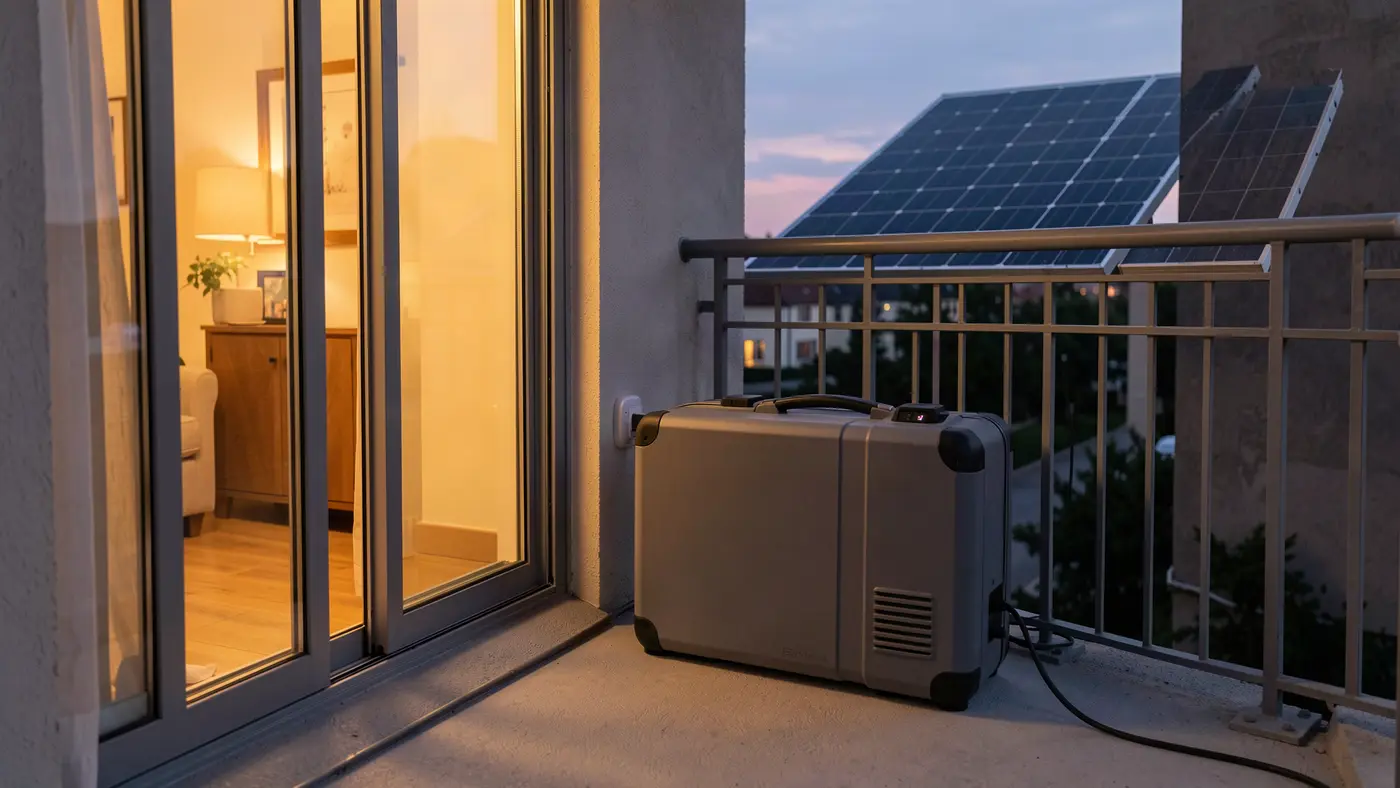
Surplus charges a battery that feeds the home after sunset. It's the only setup that moves solar into the evening peak. It also costs much more, and the U.S. plug-in battery systems we checked were sold out in November 2026. Maine's law explicitly covers plug-in batteries; elsewhere, ask what certification applies.
Which to choose
- Small kit (under about 400 W): plain. Most homes use that much all day.
- Big kit, someone home in the day: plain or zero-export.
- Big kit, empty home all day, high rates: a battery is the only way to capture most of it. Run the payback numbers with the battery's cost first.
Batteries in detail: plug-in batteries.