Does plug-in solar work in winter?
Yes, but less. Short days cut output almost everywhere. The surprise is that a vertical railing panel, the weakest setup in summer, holds up well in winter.
Winter vs. summer, by angle
Clear-sky sunlight reaching a south-facing panel per square meter in a day, from the same model our simulator uses:
| Latitude | Panel | Mid-December | Mid-June |
|---|---|---|---|
| 30°N (Houston) | Vertical (railing) | 4.8 kWh | 0.9 kWh |
| 30°N | Tilted 35° | 5.5 kWh | 6.8 kWh |
| 40°N (Denver) | Vertical (railing) | 4.3 kWh | 1.9 kWh |
| 40°N | Tilted 35° | 4.2 kWh | 7.5 kWh |
| 40°N | Flat | 2.2 kWh | 8.5 kWh |
| 47°N (Seattle) | Vertical (railing) | 3.5 kWh | 2.7 kWh |
| 47°N | Tilted 35° | 3.1 kWh | 7.9 kWh |
Clear-sky model (Meinel air-mass formula) with a simple diffuse term and no ground reflection, so absolute values for vertical panels run low. Use it to compare positions, not to predict output. Weather cuts real winter numbers further.
What it means
- A vertical south-facing railing panel gets about as much clear-sky sun in December as a tilted one, because the winter sun is low.
- In summer it loses badly; the sun is too high.
- So railing kits have a flatter year: less summer peak, decent winter.
Snow
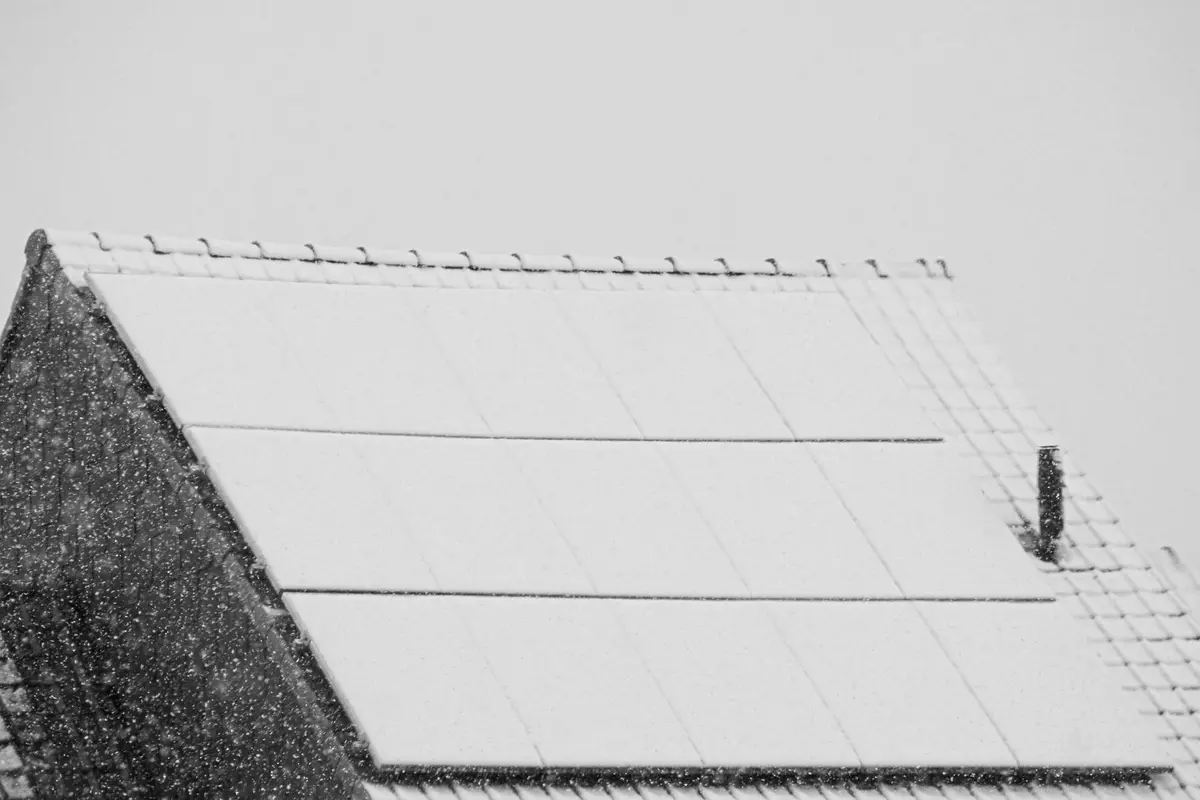
Steep and vertical panels shed snow quickly; flat ones can stay covered for days. Don't climb onto railings to clear a panel.
Try your own location and month in the sun simulator.